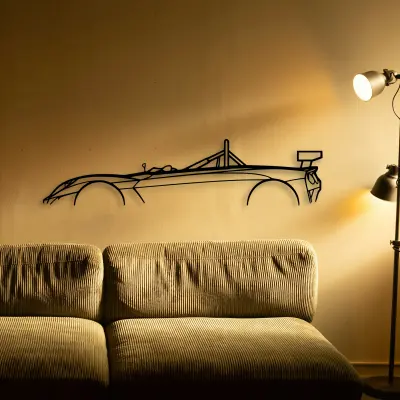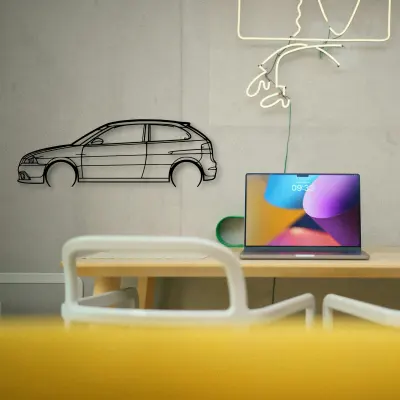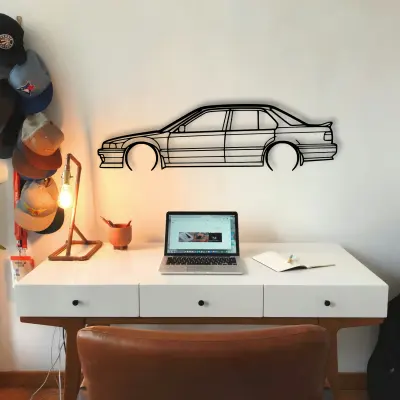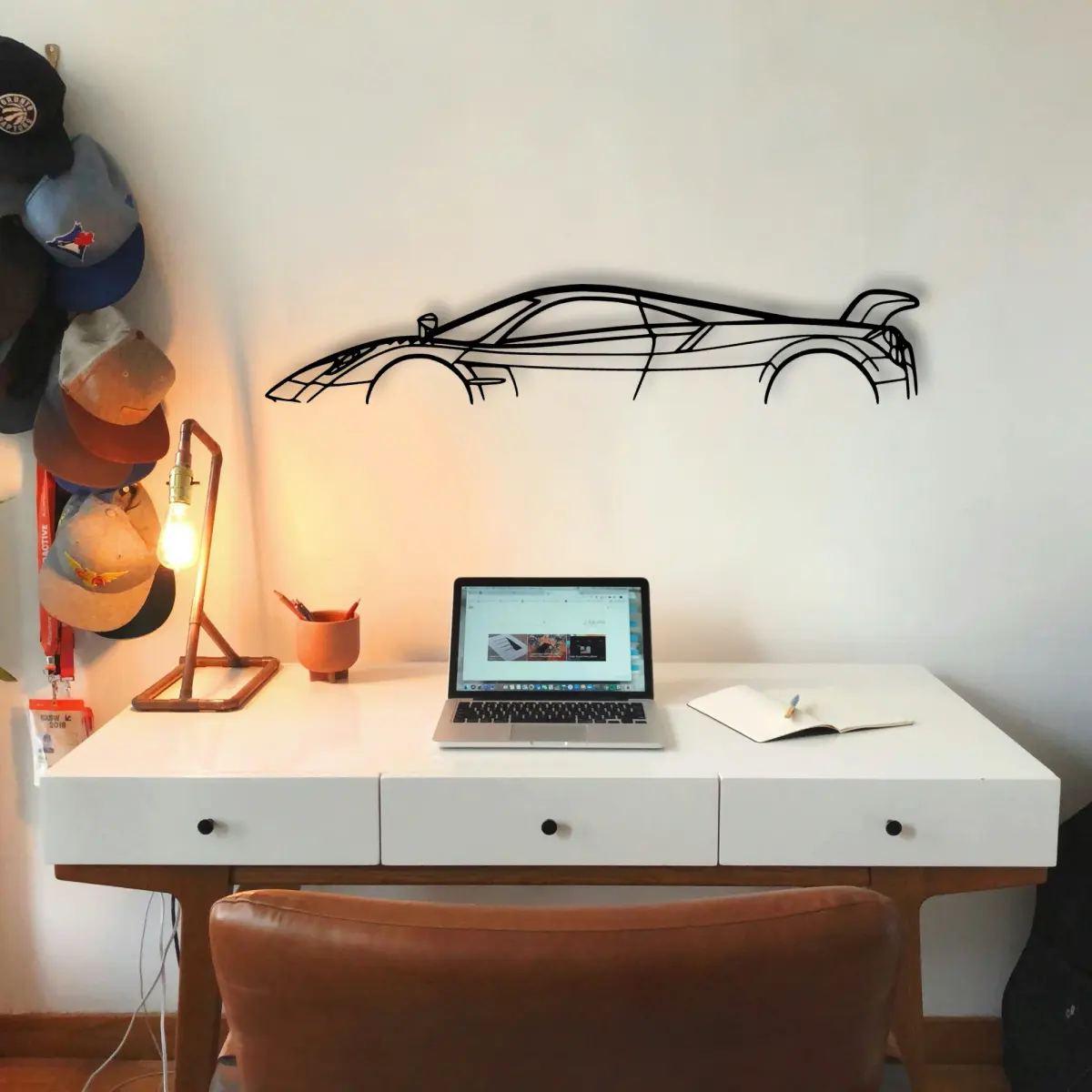
A Pagani enthusiast does not leave the passion at the door. The drive, the stop, and the plane at home are one hobby, and a form is the thread between them.
What makes the Pagani work as a souvenir is that it carries no colour of its own. Cut from sheet metal and finished for indoor display, it fits any room you come home to.
Honest material, no colour
A Pagani form in steel asks the line to do all the work — there is no livery, no badge colour, no gradient to lean on.
One piece, one trip
A single Pagani form per journey reads as a chapter. A wall of them becomes an autobiography.
Five sizes for the memory
Every Pagani form comes in the same five sizes: 50 cm, 80 cm, 100 cm, 120 cm and 140 cm. The price steps with the size, from $69.95 to $209.95.
- 50 cm — a shelf or a study; an accent, not a feature.
- 80 cm — still modest, but reads across a doorway.
- 100 cm — the safe feature-wall default.
- 120 cm — for rooms where the car is the subject.
- 140 cm — the full statement piece.
Pick the outline that fits the memory
A Pagani form works best when it names the exact car or era you travelled with. Specific beats generic.
More than one on the plane
A row of Pagani outlines, each a different trip, turns a wall into a timeline you can read at a glance.
Build the set
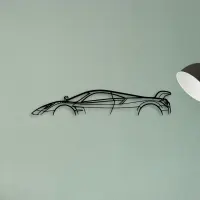
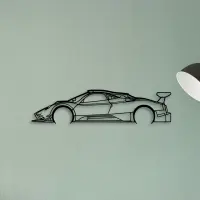
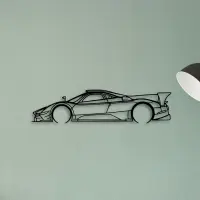
Give it room to mean something. A form left alone on a clear wall says more than the same shape lost in a crowd.
Small changes in height read as care. Keep the horizon line steady when you group more than one.
Maintenance is close to nothing. A quick dust is enough; there are no frames to chip and no glass to clean.
Light from the side reveals the cut; light from the front flattens it. Aim for the reveal.
Pick the outline that matches the room's energy: calm spaces want restraint, busy ones want a statement.
A dedicated wall beats a crowded one. Give the car room and it repays the attention.
Hang it where the light lands first. The edge you notice on the way in is the edge worth cutting.
The plane behind should be the quietest thing in the room. Let the outline be the loud part.
Read it from the doorway, not up close. The whole point is the gesture the line makes at a distance.
Quiet rooms suit a smaller form; loud rooms need one that can hold its own from across the space.
The right size is the one you forget to notice because it fits the plane so well.
Cut metal has a weight that printed art lacks. The shadow it casts is part of the piece, not an accident of the light.
Start with one. A single correct piece teaches the eye what the rest of the plane should do.
The best wall pieces are the ones you stop seeing as decor and start reading as a subject.
A piece does not need a frame to feel finished. The cut edge is the frame.
Resist the urge to fill. An empty margin around the outline is what makes it feel considered.